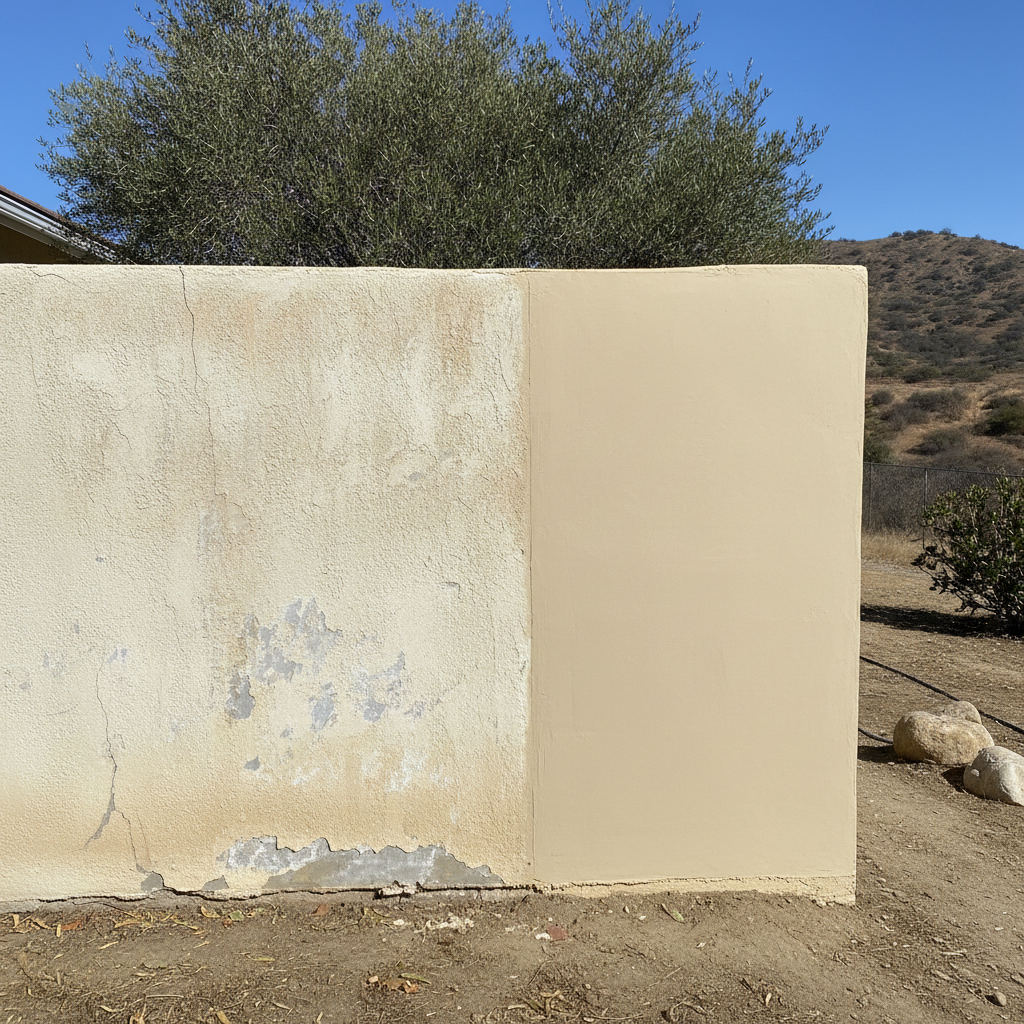
Alright, let's talk stucco repair. If you're a homeowner here in San Dimas, chances are you've either dealt with a crack or a ding in your stucco, or you will. It’s just part of owning a home, especially with our dry, hot summers and occasional heavy rains that can really stress building materials. When that happens, you’ve basically got two main routes to go: a targeted patch job, or a full re-dash of the affected wall or even the whole house. Both have their place, but they’re definitely not the same thing. Let's get into what you need to know.
The Quick Fix: Stucco Patching
A patch job is exactly what it sounds like. We’re talking about fixing a specific, isolated area of damage. Maybe a soccer ball hit the wall, or a tree branch scraped it, or you had a small plumbing leak that damaged a section. For these kinds of issues, patching can be a really good option.
Cost & Time
This is where patching shines. It’s generally much cheaper and quicker than a full re-dash. We’re only buying and mixing enough material for a small section, and the labor is focused on that one spot. You’re usually looking at a few hundred to a couple of thousand bucks, depending on the size and complexity. We can often get it done in a day or two.
Durability & Maintenance
A good patch, done right, will be just as durable as the surrounding stucco. The key phrase there is 'done right.' You can't just slap some mud on it. It needs proper prep, bonding agents, and the right mix. Maintenance is pretty much the same as the rest of your stucco – keep it clean, watch for new cracks.
Appearance
Here’s the catch with patching: matching. Stucco fades over time due to sun exposure, especially here in Southern California. The original color might have changed quite a bit since your house was built. Even if we use the exact same color formula, a fresh patch will almost always look a little different from the aged stucco around it. It’s like putting a new tire on a car with three old ones – it sticks out. We can try to blend it, but a perfect, invisible match is rare unless the original stucco is very new or very consistent. If your home has a smooth finish, it's a bit easier to blend. If it's a heavily textured Santa Barbara or dash finish, blending can be trickier because the texture itself needs to match perfectly.
The Bigger Project: Full Re-dash
Now, a full re-dash is a different beast. This means we’re applying a brand new finish coat (and sometimes a new base coat too) over an entire wall, or even the whole exterior of your home. This is the route you go if you have widespread cracking, significant water damage across a large area, or if you just want to completely change the look and color of your house.
Cost & Time
No surprise here, a full re-dash is a bigger investment. You’re paying for a lot more material and a lot more labor. This can range from several thousand dollars for a single wall up to tens of thousands for an entire home. It’s also a longer process, usually taking several days to a week or more, depending on the size of the job and weather conditions.
Durability & Maintenance
This is where you get a fresh start. A full re-dash gives you a brand new, consistent, and highly durable exterior. It’s essentially resetting the clock on your stucco’s lifespan. If done correctly by a reputable company like Absolute Stucco, it should last for decades. Maintenance is standard – cleaning, keeping an eye out for issues.
Appearance
This is the big win for a full re-dash. You get a perfectly uniform color and texture across the entire area. No mismatched patches, no faded spots. It looks brand new. You can also choose a completely different color or texture if you want to update your home's curb appeal. This is often why people choose it, even if the damage isn't severe – they want a fresh look.
My Recommendation for San Dimas Homeowners
So, which one should you choose? Here’s my take, based on what I’ve seen working on homes all over San Dimas, from the older ranch-style homes near the foothills to the newer developments down by the 57 freeway.
If you have a small, isolated crack or a ding, and you’re okay with a potential slight color difference, a patch is probably your best bet. It’s cost-effective and gets the job done without a huge disruption.
However, if you have multiple cracks, widespread fading, or you’re just tired of looking at a patchwork of repairs, I’d lean towards a full re-dash. Especially if your stucco is older than 15-20 years, a full re-dash gives you a consistent, fresh look and a renewed protective layer for your home. It’s a bigger upfront cost, but it adds significant value and curb appeal, and you won’t be chasing new patches every few years. Our intense sun here in San Dimas really takes a toll on stucco over time, making color matching a nightmare for patches on older homes.
Ultimately, it comes down to the extent of the damage, your budget, and how important a perfectly uniform appearance is to you. Give me a call, and I can come out, take a look, and give you an honest assessment of what makes the most sense for your specific situation.